Forensic Crashworthiness Litigation
Vehicle Crashworthiness Attorneys
When a defective vehicle turns a survivable crash into a catastrophic injury, the vehicle itself becomes the evidence.
The Tracy Law Firm investigates how seatbelts, seats, roofs, airbags, tires, and fuel systems actually performed during the collision — then pursues the manufacturers and component suppliers responsible.
Request a Crashworthiness Case Review
What Crashworthiness Means — And Why It Matters To Your Case
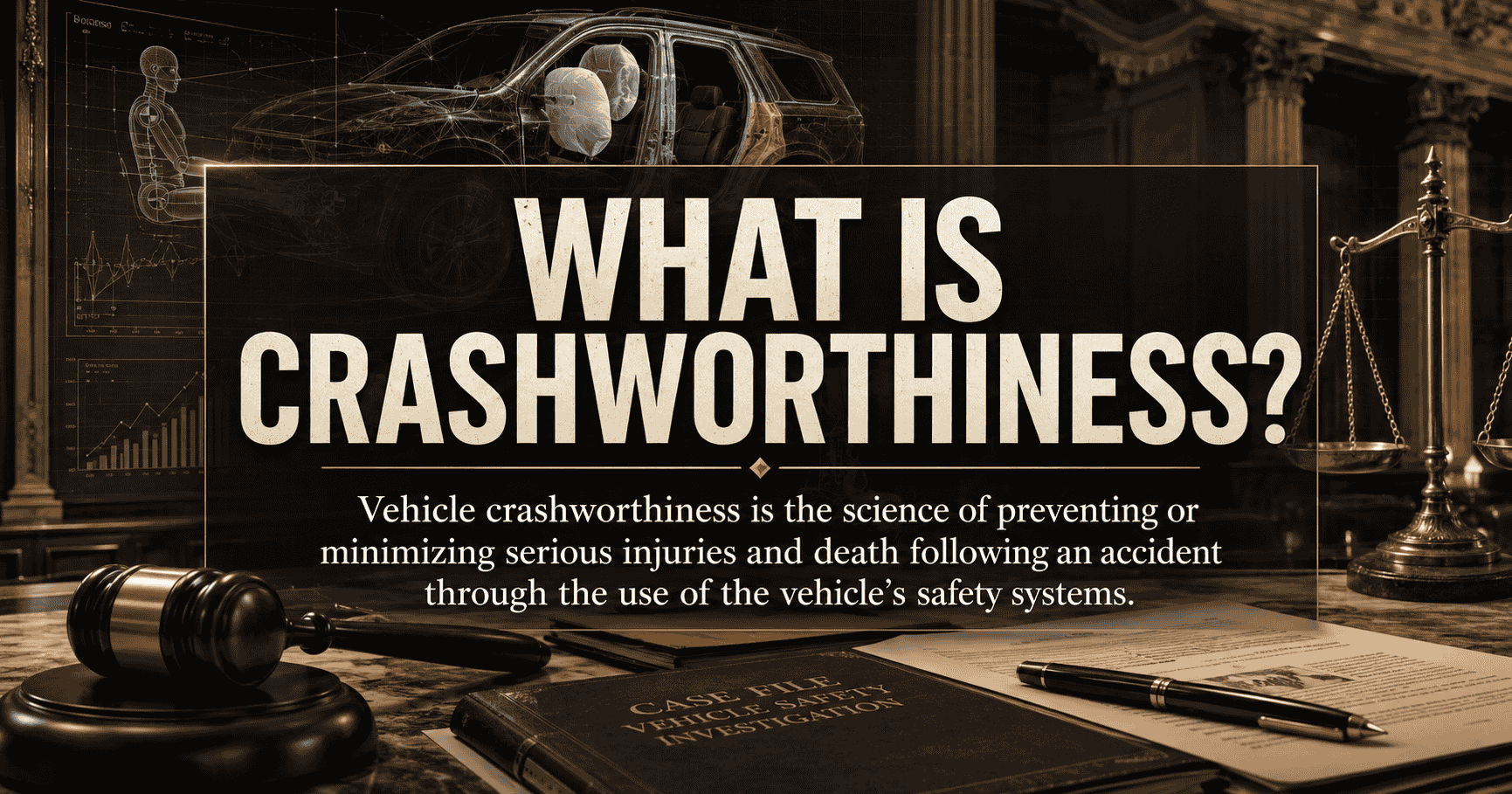
Crashworthiness is a vehicle's measured ability to protect occupants when a collision occurs — independent of who caused the crash.
A crashworthiness claim does not ask who caused the collision. It asks a different question: why were the injuries this severe? When a seatbelt unlatches mid-impact, when a seat back collapses rearward, when a roof crushes into the occupant during a rollover, or when a fuel system ruptures and ignites after the collision, the vehicle itself has worsened the harm. That failure is the case.
Todd Tracy approaches every matter as a forensic engineer first. His Bachelor of Science in Physics shapes how he reads a crash — vector forces, energy management, occupant kinematics, component performance against published Federal Motor Vehicle Safety Standards. That technical foundation is the reason the firm built its own Crash Lab: a physical investigation space where evidence vehicles are documented, components are removed and analyzed, and the engineering story of the collision is reconstructed before a complaint is ever filed.
For the injured occupant or surviving family, this matters in one specific way. A crashworthiness case stands or falls on physical evidence and engineering proof. The work happens before litigation — in the lab, on the vehicle, in the manufacturer's design and testing records — long before a jury ever hears the story.
How We Investigate a Crashworthiness Case
A crashworthiness investigation runs on a sequence. Each step builds the engineering record the case will rest on later.

In-house engineering analysis at The Tracy Law Firm's Dallas crash lab. Every component is documented before disassembly.
1. Vehicle preservation and intake.
The subject vehicle is the single most important piece of evidence in the case. Within hours of being retained, the firm coordinates the legal hold, transport, and secured storage of the vehicle in its post-crash condition. Repairs, salvage, and insurer release are stopped first; everything else follows from preserving the physical evidence intact.
2. Crash Lab documentation.
The vehicle is moved into the firm's in-house Crash Lab for full forensic documentation — photographic, dimensional, and component-level. Seatbelts, seat structures, roof rails, airbag modules, tires, fuel system components, and door latches are examined in place before any disassembly. Every step is logged. Chain of custody is built from the first hour.
3. Component analysis and engineering work-up.
Once the vehicle is documented, suspect components are isolated for engineering analysis. Performance is measured against the Federal Motor Vehicle Safety Standards, the manufacturer's own design specifications, and the body of NHTSA recall and complaint history for the platform. The question at each step is whether the component performed the way a reasonably safe vehicle should have performed in a foreseeable collision.
4. Medical correlation and occupant kinematics.
The injuries themselves are evidence. The firm works with biomechanical engineers and treating physicians to correlate specific injuries to specific occupant movements inside the vehicle, then traces those movements back to the component that failed to restrain, contain, or protect the occupant.
5. Manufacturer discovery and case build.
Once the engineering record is in place, the litigation work begins. Design documents, internal testing data, supplier correspondence, prior incident reports, and recall records are pursued in discovery. The case is built component by component, document by document, expert by expert.
Vehicle Defects That Drive Crashworthiness Cases
Each defect category carries its own engineering profile and its own regulatory background under NHTSA oversight and the Federal Motor Vehicle Safety Standards. The firm investigates each one on the merits of the physical evidence.
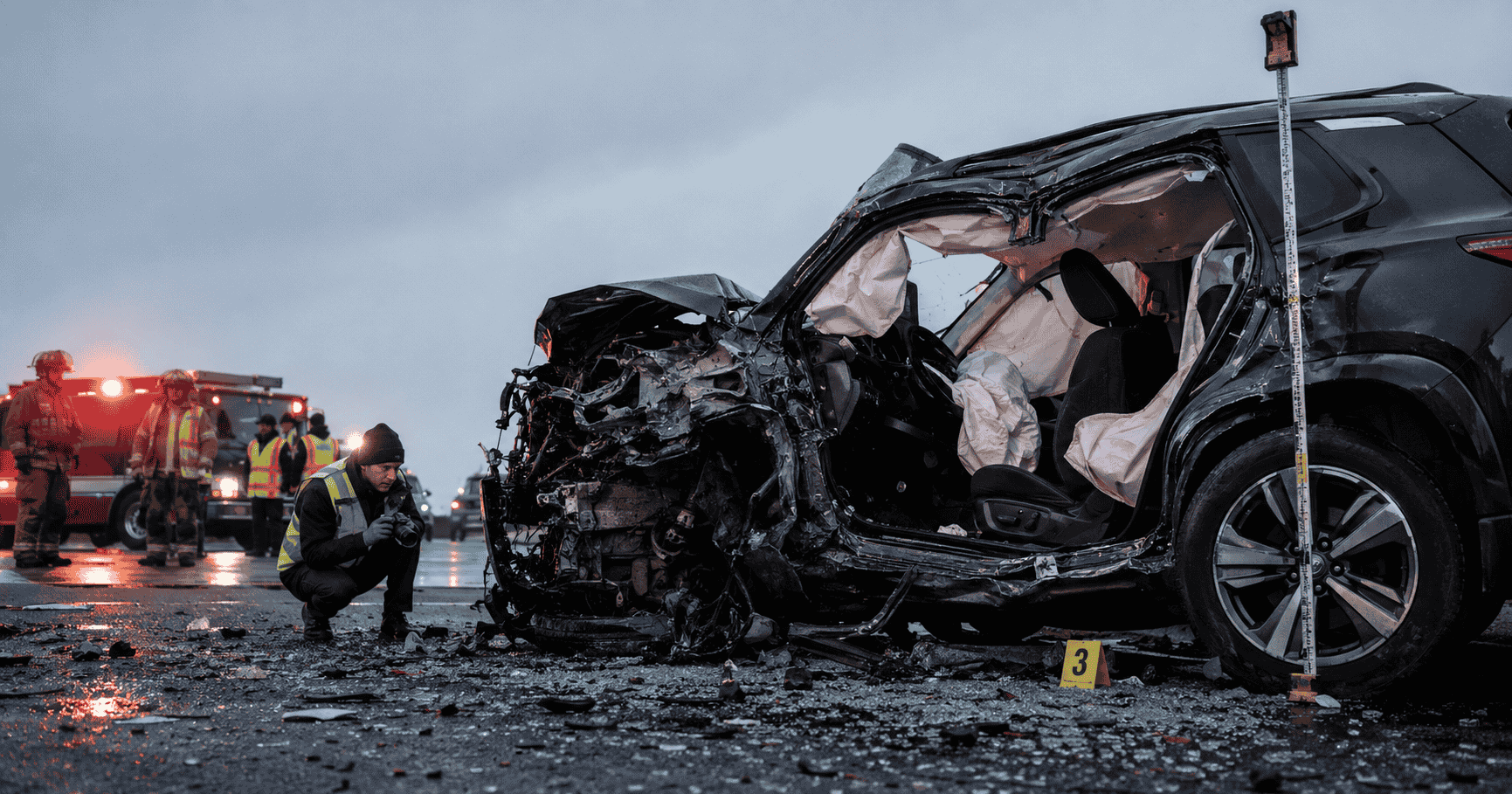
Physical evidence at the crash scene establishes the foundation of every crashworthiness investigation.
Inertial unlatching, excessive spool-out, retractor failure, and webbing skip-loading can leave an occupant effectively unrestrained in a collision the belt should have controlled. The signature is often a severe occupant injury inconsistent with a properly functioning restraint system.
In rear-impact collisions, a defective seat back can yield rearward, sending the occupant into the rear cabin and exposing rear-seat passengers — frequently children — to the front occupant as a secondary impact. Seat back integrity is among the oldest known crashworthiness issues in the industry.
In rollovers, a roof structure that intrudes into the occupant survival space can cause catastrophic head and spinal injuries even when the rollover itself is survivable. Roof strength against FMVSS 216 standards is a central engineering question in these cases.
Failures include non-deployment in a deployment-triggering event, inadvertent deployment, overly aggressive deployment, and propellant defects that send shrapnel into the occupant. Each failure mode has a distinct engineering signature.
Tread belt separation at highway speed can produce loss of vehicle control and rollover. Cases turn on tire construction, age, service history, and the manufacturer's own internal data on the tire line.
A foreseeable collision should not produce a fuel-fed fire. When fuel system integrity fails — ruptured tanks, compromised fuel lines, defective fuel pump shutoffs — survivable crashes become fatal. The engineering record on fuel system survivability is a core focus.
Door latch failures.
A defective door latch can release during a collision, allowing partial or full occupant ejection. Ejection dramatically increases the severity of injury and is one of the outcomes occupant restraint and door retention systems exist to prevent.
Child restraint failures.
Child restraint cases involve the seat itself, the vehicle anchor and tether system, and the interaction between the two. Failures here are evaluated against the specific design specifications of the restraint and the engineering record of the vehicle's anchorage system.
Who the Firm Represents
The work centers on people whose lives changed in a single collision — and on the attorneys who refer those cases knowing the engineering work will get done.
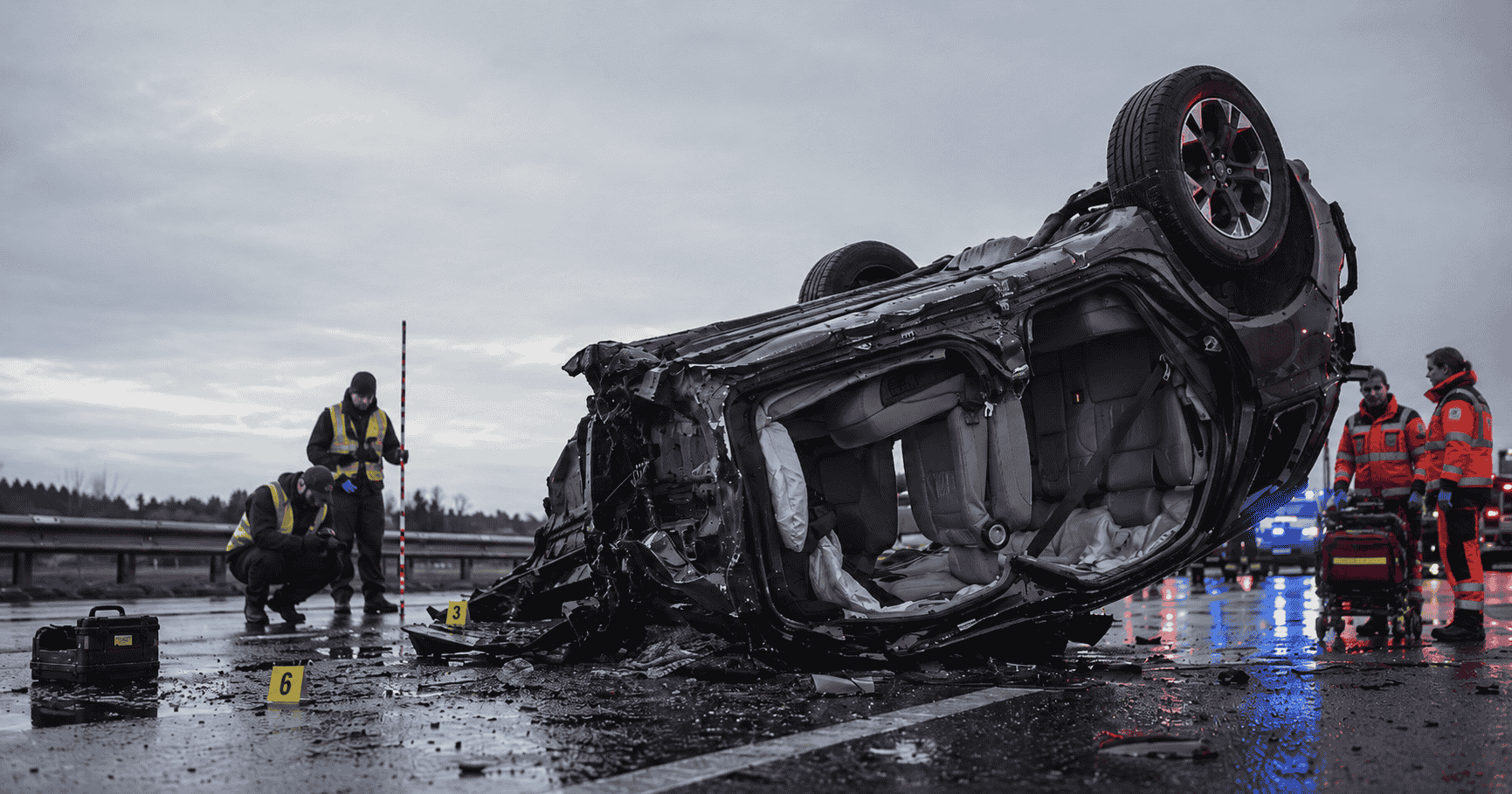
Survivable rollovers can become catastrophic when roof structure, restraints, or door latches fail to perform as designed.
Drivers and passengers who survived a collision but were injured beyond what the crash itself should have produced. These are clients who left the scene alive because the crash was survivable — and whose injuries point to a vehicle that did not perform as a reasonably safe vehicle should have.
Surviving families.
Spouses, parents, and children of occupants who did not survive. Wrongful death claims in crashworthiness matters frequently involve the same defect categories as severe-injury cases — roof crush, fuel-fed fire, ejection, restraint failure — examined under a different procedural framework.
Personal injury attorneys, trial lawyers, and general practitioners who recognize a crashworthiness component in a case they are already handling. The firm works as co-counsel on cases referred from other practices and handles the product liability and engineering side of the matter while the referring attorney remains involved on terms agreed at the outset.
National scope.
The firm represents injured occupants and surviving families in 42 states including Texas. The office is in Dallas. The work is not.
Frequently Asked Questions About Crashworthiness
What is crashworthiness in vehicle injury litigation?
Crashworthiness refers to a vehicle's ability to protect its occupants from injury during a collision. In litigation, a crashworthiness claim focuses not on who caused the crash, but on whether the design or manufacture of the vehicle worsened the injuries occupants suffered. The legal question is whether a reasonably safe vehicle, performing as it should under foreseeable conditions, would have prevented or reduced the harm.
How is a crashworthiness case different from a typical car accident claim?
A standard auto negligence case asks who caused the collision. A crashworthiness case asks why the injuries were as severe as they were. The defendant is typically the vehicle manufacturer or component supplier rather than another driver. These cases involve detailed examination of vehicle components — seatbelts, seat backs, roof structure, airbags, tires, fuel systems — measured against engineering standards and the Federal Motor Vehicle Safety Standards.
What types of vehicle defects can support a crashworthiness lawsuit?
Common defect categories include seatbelt failures such as unlatching or excessive spool-out, seat back collapse in rear impacts, roof crush during rollovers, defective airbag deployment or non-deployment, tire tread separation, post-collision fuel-fed fires, door latch failures leading to ejection, and child restraint failures. Each defect type carries its own engineering analysis and regulatory background under NHTSA oversight and the Federal Motor Vehicle Safety Standards.
Who can be held liable in an auto product liability case?
Liability in a crashworthiness matter may extend to the vehicle manufacturer, the manufacturer of the defective component, the designer of the system at issue, and in some circumstances the distributor or retailer. The analysis turns on which entity placed the defective product into the stream of commerce and whether the defect was present when the vehicle or component left the manufacturer's control.
What evidence is needed to prove a crashworthiness claim?
A crashworthiness claim is built on physical evidence and engineering analysis. This typically includes preservation of the vehicle in its post-crash condition, scene documentation, medical records correlating injuries to specific occupant movements, manufacturer design and testing documents obtained through discovery, NHTSA recall and complaint history, and reconstruction work by qualified engineers. Preservation of the subject vehicle is critical and time-sensitive.
How long do I have to file a vehicle product liability lawsuit in Texas?
Texas generally applies a two-year statute of limitations to personal injury and wrongful death claims, measured from the date of injury or death. Texas product liability law also includes a fifteen-year statute of repose for actions against manufacturers and sellers, subject to limited exceptions. Deadlines vary based on the specific facts of each case, and the safest course is to consult a qualified attorney promptly rather than rely on any general rule.
What is the role of expert witnesses in crashworthiness litigation?
Expert testimony is central to a crashworthiness case. Matters of this kind typically involve biomechanical engineers, accident reconstructionists, automotive design engineers, metallurgists, human factors specialists, and treating physicians. Each expert addresses a specific link in the chain — how the crash unfolded, how the occupant moved within the vehicle, how the component performed against design specifications, and how that performance produced the resulting injuries.
What should I do after a serious crash if I suspect a vehicle defect?
The first priorities are medical care and safety. After that, the most consequential step is preserving the vehicle in its post-crash condition. Do not authorize repairs, salvage, or release of the vehicle to an insurer until counsel familiar with crashworthiness cases has evaluated whether component evidence should be preserved. Photograph the scene and vehicle if possible, retain all medical records, and document any post-crash communications with insurers.
Evidence Has a Shelf Life
Start a Crashworthiness Investigation
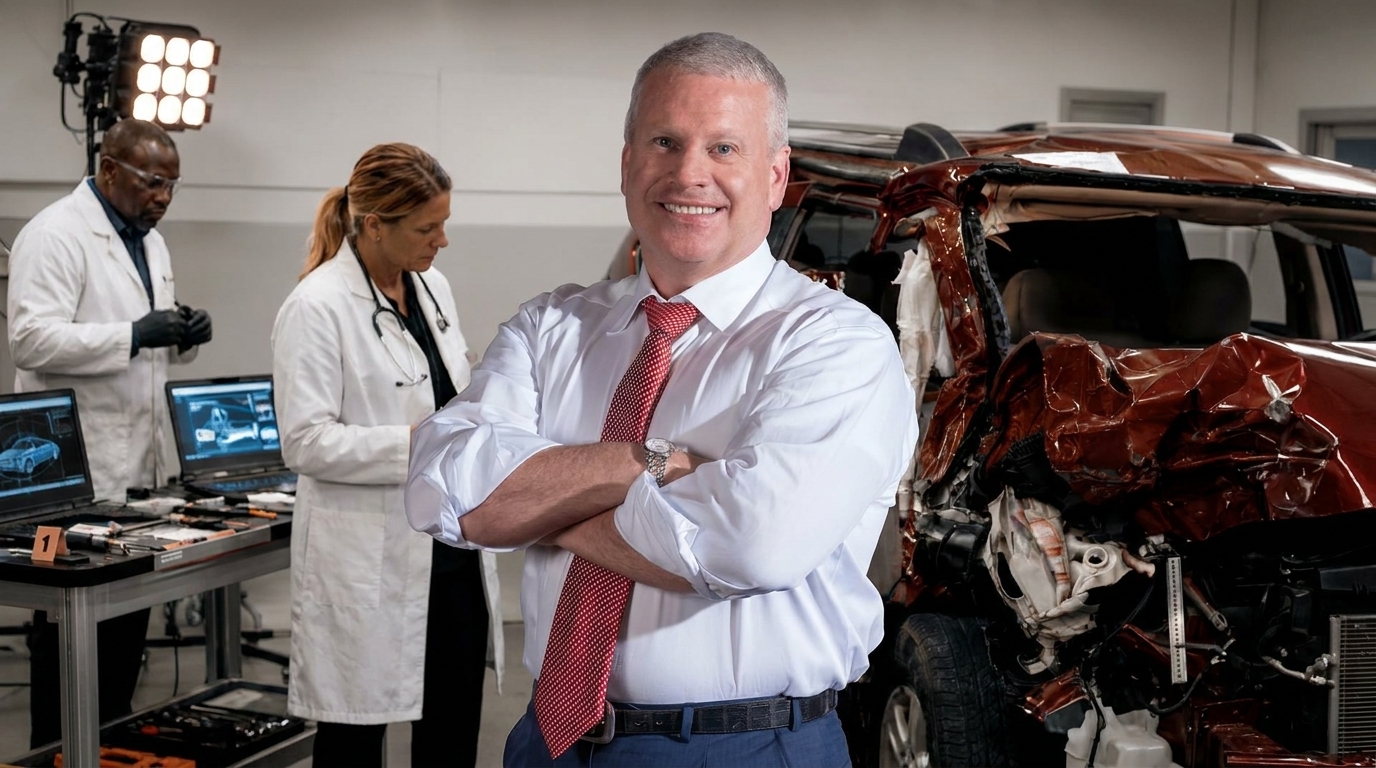
Todd Tracy reviews every potential crashworthiness matter personally before the firm accepts engagement.
If you survived a crash that should not have produced the injuries it did — or you lost someone in one — the vehicle itself may be the single most important piece of evidence in the case. Repairs, salvage, and insurer release start the clock the day the vehicle leaves the scene. The firm reviews potential crashworthiness matters at no cost and no obligation.
Request a Case Review
